

















IPB

Welcome Guest ( Log In | Register )

 
Reply to this topicStart new topic
Perfumes of old and new India, - Printed in American Perfumer and Cosmetics Vol.85, June 1970
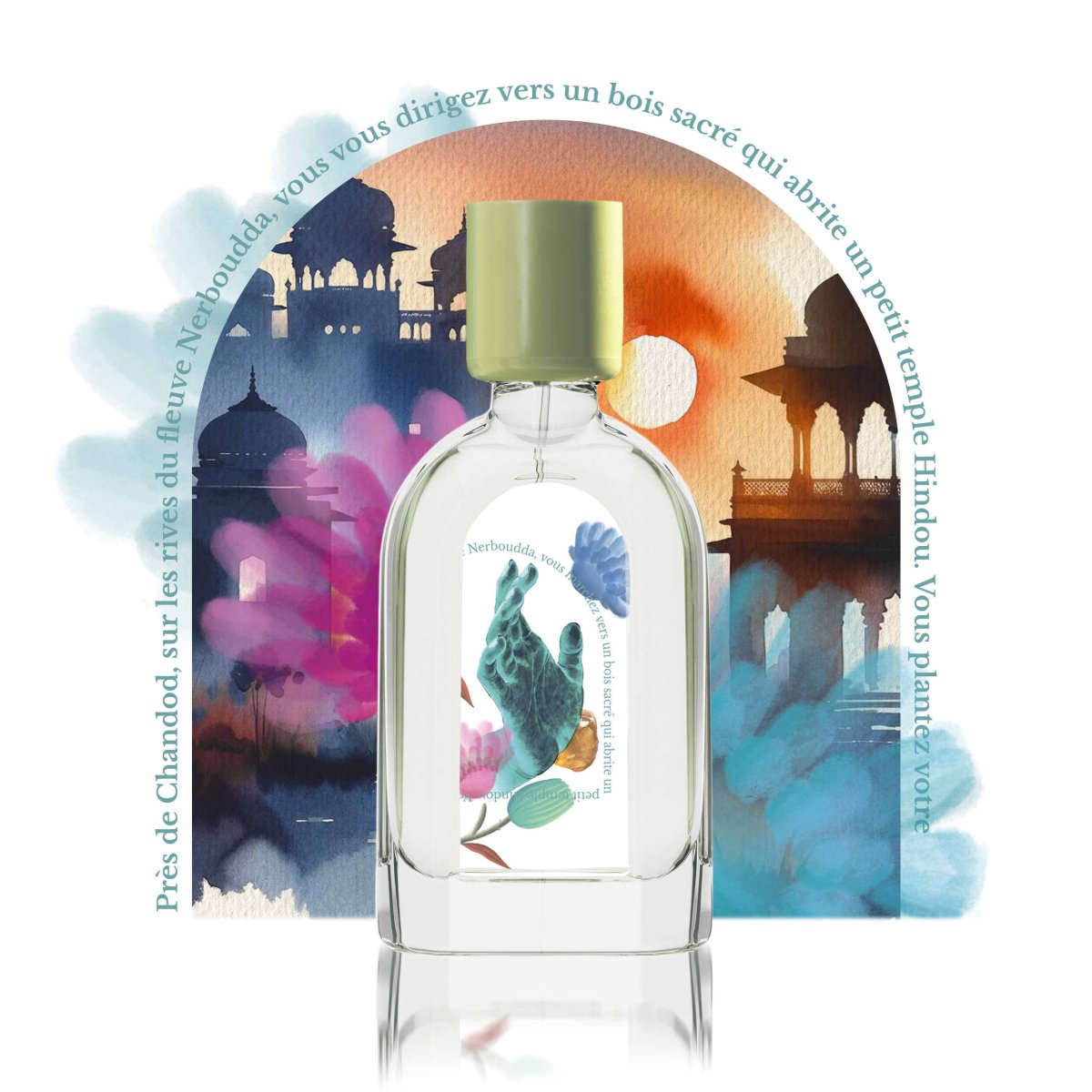
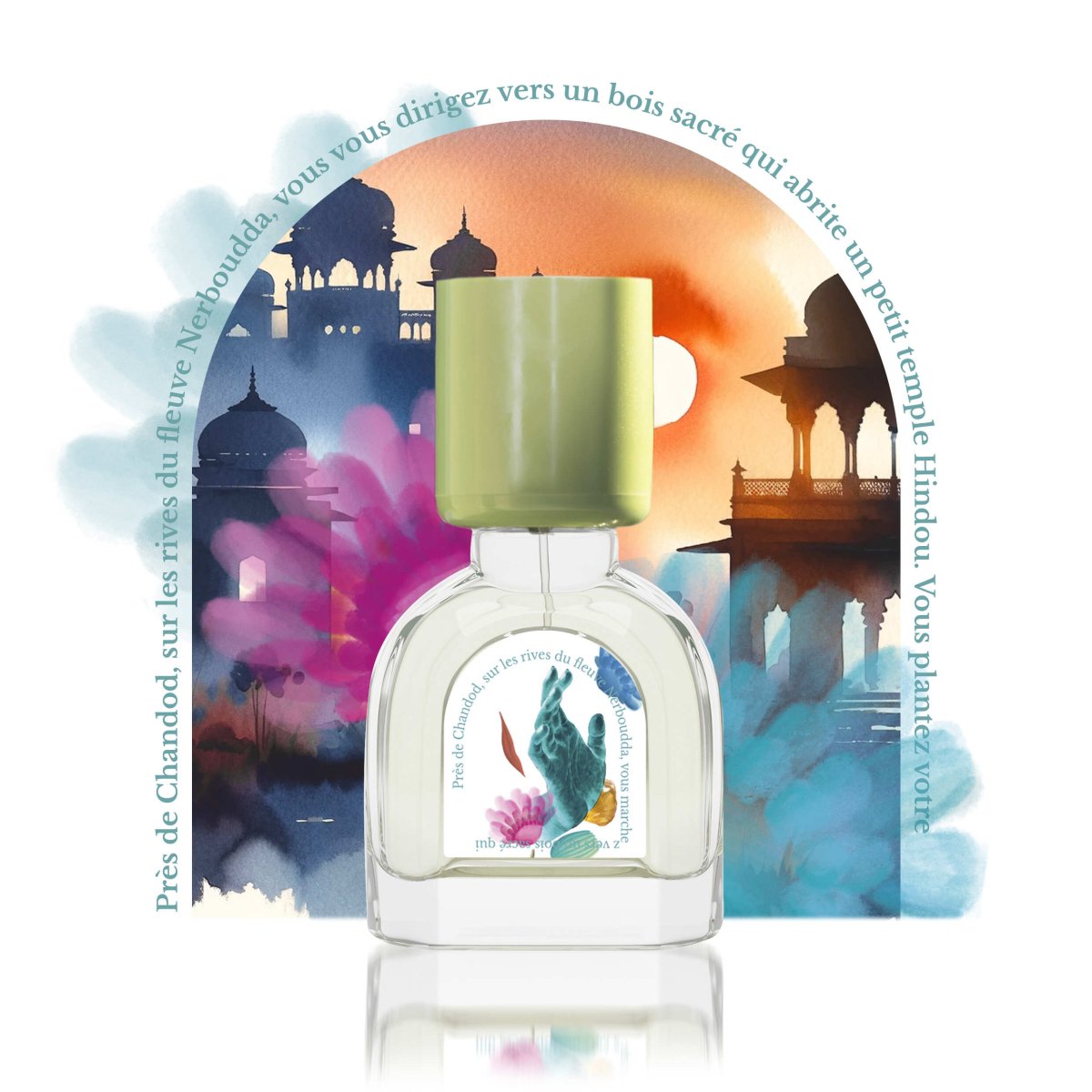
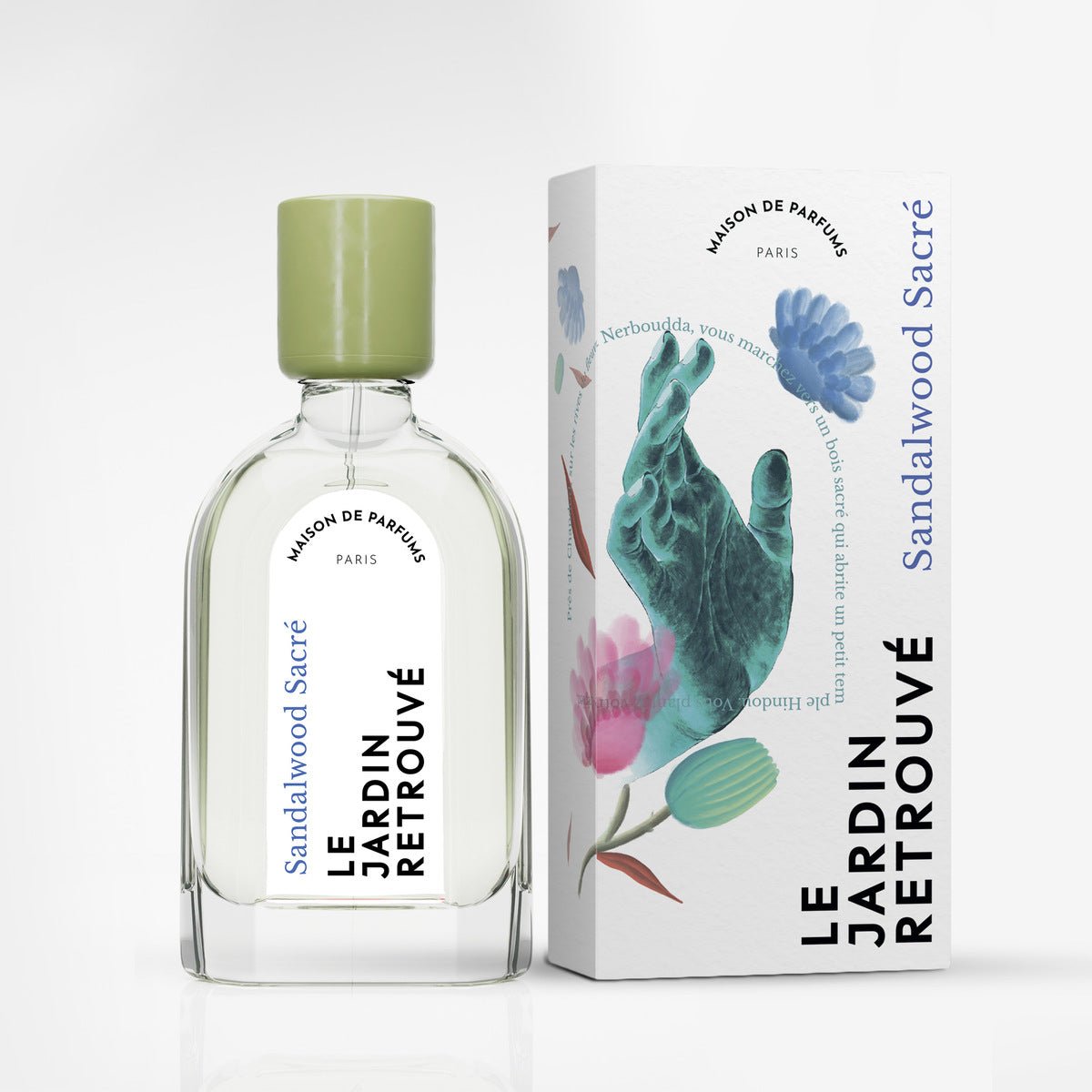
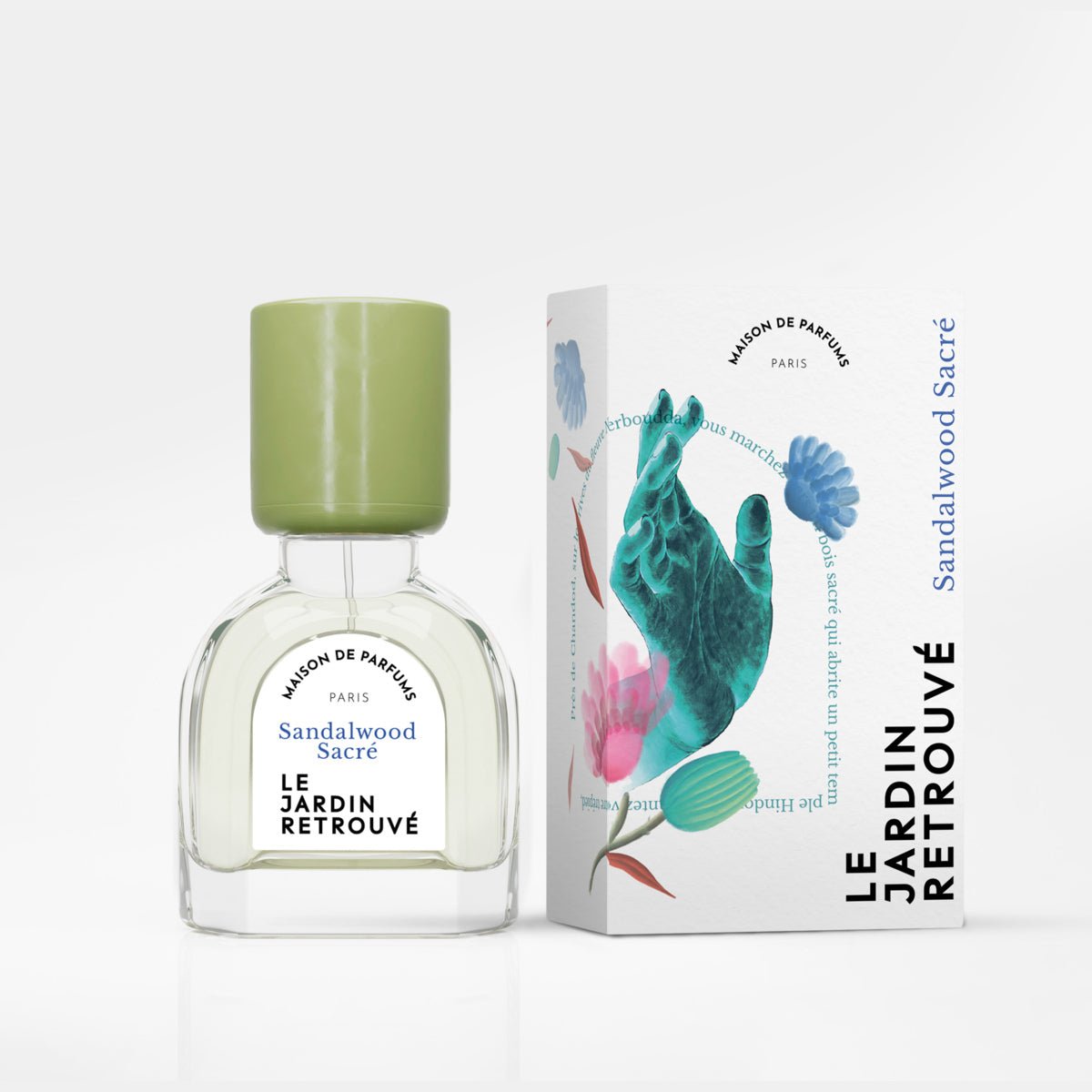
Le Jardin Retrou...
post 2-Aug-2009, 03:49 PM
Post #1


Administrator
***

Group: Root Admin
Posts: 123
Joined: 26-February 06
From: France
Member No.: 1


Perfumes of India - old and new


First of all, let us briefly situate India. Geographically, India is a vast subcontinent, a triangle extending southward from the vast Asiatic continent between the snowy Himalayas and Cape Comorin below the Tropics. All types of climate and all possible vegetable species are represented in India. Historically, present-day India results from the accumulation of thousands and thousands of years of civilizations; it is a conglomerate of races and religions, of languages and traditions, a melting pot in which contributions from all the successive invaders of this vast land were more or less successfully fused with the aboriginal Dravidian civilization, contributions from the Aryans, 3000 B.C., to the still visible traces of British presence, not to mention in passing, Alexander the Great and Greek civilization, the Persians, the Afghans, Tamerlane and his cavalry, Vasco da Gama and his Portuguese adventurers, and the Dutch merchants of the l7th century.

Over a background of such a strange variety, in this land where recent history is a ceaseless tale of open opposition, of states cruelly torn by faction, of wars, of terrible famine where present-day economy emerges from a shocking state of under-development, where demographic growth is far greater a danger than were the Mongol hordes in the 15th century, where all problems have to be solved simultaneously, a large number of deep-rooted traditions have become an integral part of the people's life. And one of these is traditional perfumery. It dates back thousands of years and, just as in the Bible, Vedic legends mention this tradition, the origin of which is lost in the mists of time.

India was always a favorite birthplace for perfumery plants, and while it is unnecessary to go as far back as the now disappeared civilizations of the Indus Valley, one should not forget that rose and jasmine are of Indian origin and that they were imported into Europe by the Crusaders via the Damascus route. In the 17th century the Shalimar gardens, created in the city of Lahore by Mogul Emperor Jehanguir, were famous throughout the world for the beauty of the roses and jasmine.

Rich and bountiful, Indian nature has lavishly endowed this country with odoriferous plants, and its people have learned to appreciate them and consider them as an integral part of everyday life.

To quote P. A. Narielwala, one of the directors of the TATA Group of industries and at the time the chairman of The Essential Oil Research Committee, in his inaugural address on the occasion of the 1st Annual General Meeting of the Indian Perfumery Manufacturers Association in Kannauj:

"There is considerable evidence to show that the production and use of perfumes and aromatics have developed to a great extent in India. Famous travelers who visited India in the bygone days have described this country as the land of aromatic flowers, fruit, wood, roofs, resins and grasses. Sandalwood and its oil constituted an article of barter between India and Mediterranean countries centuries ago. Historians have often urged that the conquest of Egypt by Rome was because the Romans coveted the perfumes which Egypt obtained from India. They wanted to control their distribution in the interest of the nobility, who felt the absence of perfumes was a great void in their daily life. India came to be known for her high class perfumes and the fame of centers like Kannauj, Jaunpur and Ghazipur spread to many parts of the world. It was again India's spices and perfumes which brought the Portuguese and other European powers to the shores of India in search of these highly prized commodities." [It is reported that the battle cry of Vasco da Gama and his men, when they landed in Calicut on the western shores of India around 1600 A.D., was "Christus E Espiciarias!" (In the name, of Christ and spices!)

"The perfumes of India and the East were so popular that in the Bible numerous references are found. The Jews and Christian burned aromatic gums in their religious ceremonies just as Indians burn camphor when they perform Arati (a religious function). In the Song of Solomon, Indian perfumes, i.e., oil of cinnamon, spikenard and myrrh, are prominently mentioned. In the Bible there is, mention of a protest being registered by Ezekiel and Isaiah against the restrictions laid down by certain governments against the use of perfumes for other than religious purposes. There are many records which prove the great popularity of Indian perfumes among the nations of the world. It was the intercourse with the Orient which was brought about by the travelers and merchants that made Europe appreciate the perfumes which were at that time manufactured in the land of Hindustan, as the Persian and Arabian historians put it. In the Shahnama of the great poet Firdausi, mention of Indian perfumes and the places of their manufacture like Kannauj, Jaunpur, etc., is made."

In traditional Indian perfumery, both old and contemporary, there are some permanent features; and while techniques may have changed up to a point, the guidelines, the taste of the public and its preferences in the use of aromatic materials to this day have remained what they were centuries ago.

One can say that Indian perfumery since long bygone days is based on sandalwood oil that has heretofore had some kind of an Indian monopolistic production. Sandalwood from India! A poet could write an ode of a thousand verses to glorify sandalwood, and by doing so he could almost tell the history of India's civilization from birth to death. This precious wood which retains its scent during dozens of years has always been used for carving miscellaneous ornamental and common usage articles covering the entire range from statuettes of gods and goddesses to the wooden pearl necklaces that have become fashionable within Hippie and less Hippie circles! Sandalwood, the odorous wood piled up to form funeral pyres along the banks of the Ganges and elsewhere (when the relatives can afford the expense), sandalwood whose penetrating, sweet, long lasting odor has impregnated Indian perfumery from ancient times to the present.

Among the typical Indian perfumery creations appreciated nowadays just as they were in ancient times, attars should be mentioned first. They have always been India's favorite perfumes. An attar is a flower distillate, an oil obtained by redistillation over sandalwood. There are attars of rose, jasmine, keora, champac (the last two named are very highly odorant Indian flowers that are to be found nowhere else in the world). The present preparation of attars is probably very similar to the age-long processes and its secrets are reverently passed from father to son in those places which have continued to be the centers of a thriving perfume industry such as the city of Kannauj.

Oil of sandalwood is heated with water on an open fire in a small still embedded in a brick oven and fitted with a bamboo pipe as condenser. A certain amount of jasmine flowers, bela for example, are dropped into the heated oil and the mixture is then subjected to distillation. The oil collected during the first distillation constitutes the attar of jasmine. This can be redistilled one, two or three times while more flowers are added each time. These successive distillations produce more strongly perfumed attars with a higher content in flower oil; consequently, they are more valuable.

Attars are used in precisely the same fashion as Western women use perfume, except that the attar as such is used as a perfume concentrate.

Besides the world famous Mysore Government sandalwood oil, there are a number of private distilleries scattered over the country, the most efficient of which are found in the old regal city of Kannauj (once the capital of a vast kingdom under the Gupta dynasty in the 7th-8th century A.D., located in the rich and overpopulated Ganges Valley a short distance from the holy city of Benares). To obtain sandalwood logs for their stills, private manufacturers attend auctions held by the Mysore government, owner of the trees. Needless to say, it so happens that these distillers have quite a hard time purchasing decent lots of wood; whatever their bidding at auction, the best lots are more often than not sold to the government's distillery.

I wish to recall a personal experience. I happened to have formed a rather close friendship with a family of distillers in Kannauj comprising the father and four sons. One day the oldest son, who usually wore Western type clothes, paid me an unexpected visit clad in full Indian national dress, snow-white dhoti (a kind of long shirt) and white cap, the so-called Gandhi cap. As I showed some surprise at his attire, my friend explained that he was on his way to request a hearing and complain to "Panditji" - a familiar designation of the late Jawaharlal Nehru - against the auctioneers from Mysore. He added, "Panditji has always helped small people to live. He will now help us, in Kannauj, to obtain a decent supply of sandalwood logs to run our plant." Needless to say, besides complaining to Panditji, my friend had to struggle for quite some time before receiving impartial treatment at auctions. However, as far as I know, Mr. Nehru received him and other small dealers. Sandalwood is a sacred item in India and plays an important part in the country's economy.

Sandalwood enters into the manufacture of agarbathies also, another traditional specimen of Indian perfumery and dating back to ancient times. Agarbathi is the Indian name for the incense sticks produced in the millions, and maybe billions, mostly in the south of the country and more particularly in the city of Bangalore.

Agarbathies are quite a familiar feature in the life of the people of India. They are burned like candles in temples, in private homes and shops, in front of images of deities. They are burned at all festive occasions, at weddings, at Divali, the Hindu New Year, at all religious and semi-religious functions, at the inauguration of industrial plants or opening of new offices, or simply for no particular reason but to release pleasant odors. Their fumes penetrate the day to day Indian life just as they did in bygone days.

The agarbathi is a most typical specimen of traditional Indian perfumery. Its preparation is subject to permanent rules and is based on a selection of aromatic products that has not changed ever so slightly in the interim. Naturally, modern perfumery has actually penetrated the agarbathi field and the manufacturers use modern ingredients such as aromatic chemicals and compounds, although nothing has changed basically. Agarbathies are, with sandalwood oil, the permanent link between old and new perfumes of Hindustan. The matter is important enough to be explained in detail.

The agarbathi industry in India is one of the oldest and has been handed down through successive generations of skilled perfumers. « It owes its preservation and development to the patronage of the aristocratic and ruling classes in the past. According to available information, the manufacture of agarbathies flourished in Tanjore and adjacent areas of the south during the Mahratta rule, Muslims being proficient in the art. Several decades ago the art was brought to Mysore State by some who migrated there. As is the case with all arts, the agarbathi industry also enjoyed the patronage of the ruling house of Mysore and progressed rapidly to such an extent that at present Mysore State is proud to be the leading center for quality agarbathies.

In the traditional manufacture of agarbathies the raw materials consist of odoriferous roots, barks, seeds, leaves, flowers, wood, gums, moss and lichen, i.e., sandalwood, agarwood, deodarwood, khus (vetivert), costus, nut-grass, spikenard, licorice and calamus troots, cinnamon, cascarilla and kapurkachri barks, ambrette, aniseed, musk, ajowan (thyme), gowla and cardamon seeds, patchouli, davana leaves, saffron, dried rose buds, laurel, bakool and jasmine flowers, benzoin, styrax, myrrh, olibanum, labdanum, Peru and tolu balsam resins, cloves, nutmeg and borneol in addition to costly animal products such as ambergris, musk and civet.

The process of manufacture is entirely manual and is carried out by women, as deftness and nimbleness are called for. Provision of thin bamboo sticks on which the perfumed mass is applied is by itself a subsidiary craft. These thin sticks of near round shape cannot be made by machines and have to be shaped by hand in varying lengths and thicknesses, normally 15 cm to 27.5 cm in length and 1 mm to 3 mm in diameter. The basic raw materials presently used in high quality agarbathies (masala bathies) are 20 to 60 in number, consisting of ground odoriferous roots, barks, herbs and flowers. To specific amounts of these (depending on the formulations involved for different varieties of bathies) are added resins, essential oils and aromatic chemicals and this mixture is ground into a fine paste, water and color being added whenever required. Wood gum in an amount of 10 to 20 percent is mixed and kneaded into this ground mass. The resulting hard paste is applied to the bamboo sticks which are rolled to the required thickness with the palms on a smooth wooden surface.

In Mysore the rolling with the palm is characteristically finished off by the forearm to give a much smoother finish, which is a distinguishing feature of certain varieties produced in Mysore City alone. These are dried in the shade and subsequently perfumed additionally whenever required before being weighed and packed. There are modifications in the process where "Durbar" varieties are concerned. Here the gum (halamaddi) is heated over a stove to reduce its consistency and is then applied to the sticks when hot, without the addition of water. A cold process involving addition of water is also prevalent. The time during which bathies will burn can be controlled by the individual formulation as well as by the length and thickness of the product.

Far removed from the above process are cheap "javaji" bathies made from charcoal powder and "jigit" (binding medium) and coated with perfume. These are intended to cater to the demand for cheap agarbathies in the markets. They do not have the principals or effects of the traditional high class products.

The agarbathi industry affords employment to about 40,000 persons in Mysore State alone, including those engaged in the production of bamboo sticks, tin tubes, cardboard cartons and labels, and the milling units. A large number of women engage in part-time employment by taking home the prepared perfumed mass and bamboo sticks, rolling them, and delivering the finished products later.

In Mysore State the main centers of agarbathi manufacture are Bangalore, Mysore, Chintamani, Kolar, Chickballapur, Belgaum and Nanjangud, in that order. Roughly, 40 enterprises are large and 150 of medium size, the smaller ones totaling a few hundred. Although agarbathies are produced in Bombay, Poona, Jalgaon, Nagpur, Ahmedabad and many other centers, most of these have to purchase partly finished bathies from Mysore State. The turnover of agarbathies from Mysore is about Rs 4 crores ($533,000) annually.

Agarbathies are being exported to about 80 countries in the world, including San Francisco's Chinatown in the U.S.A. During the last few years exports have improved rapidly and at present agarbathies account for India's foreign exchange earning $133,000 per year, which is far ahead of the organized soap and cosmetic industries.

While there is a tremendous potential field available to Indian agarbathi manufacturers to introduce and popularize agarbathies in predominantly Buddhist and Muslim countries, where burning incense is a part of religious form, very recently the use of agarbathies has been widely popularized in the U.K., U.S.A., and Canada by the sitar maestro, Ravi Shankar, Mehesh Yogi, and the Hippies.

One could tell a long story about the influence of odoriferous fumes on the behavior of men.

The age old art of the Indian perfumer materializes in these bamboo sticks burning before the image of Ganesh, the deity of prosperity, or arranged in a vase like a bouquet of incandescent flowers, or stuck into a coconut during family functions everywhere, even in the humblest of homes.

Among the other traditional activities of Indian perfumery, snuff and chewing tobacco stand out prominently. While cigarettes of the English Virginia type blend find a ready sale in the larger cities, the consumption of snuff and chewing tobacco throughout the land is tremendous. Perfumed tobacco manufacturers, geographically speaking, are to be found almost exclusively in the northwest, in Rajahstan, in and about the city of Beawar, although similar industries can also be found in Madras State.

Here again traditional tastes are prevalent. Indian chewing tobacco has always been perfumed, primarily with oil of geranium and musk. Nowadays, oil of geranium being scarce and natural musk being far too expensive, synthetically obtained compounds has more or less successfully replaced the naturally occurring materials. However, it is practically impossible to induce an Indian chewing tobacco manufacturer to use other types of fragrances.

India, at all times, has exhibited profound sensitivity to odor as one of the constituents of everyday life, a sensitivity to perfume that embellishes existence. True refinement where odorant sensations are concerned and a thorough understanding of the influence of odor, good odor, on the life of human beings is found reflected in Indian customs. Perfume braziers have been known since remotest antiquity throughout the civilized world which, at that time, was limited to the Mediterranean Basin. And Indian civilization, while completely outside this geographical area (although open to Hellenic influence since the conquests of Alexander the Great) has left admirable perfume braziers to posterity. Wrought by the exceptionally skillful Indian craftsmen, these are to be found made from solid silver, or from copper inlaid with valuable enamels in the shape of flowers, animals such as elephants and tigers, and birds, especially peacocks. These true works of art, used for ornamental purposes in temples and palaces just as in more humble homes, were part of the daily environment and fulfilled a number of functions, both utilitarian and aesthetic such as driving away the insects by means of the smoke they released, scenting and purifying the atmosphere, creating an environment favorable to meditation and, obviously, in the sacrosanct of temples, glorifying the deities.

The use made of patchouli leaves is still more remarkable. Cashmere (Kashmir) has always been known for its wonderfully fine and soft woolen shawls which, when rolled up, may be pulled through a ring. Possibly as early as the 16th century the weavers of Cashmere made use of patchouli leaves that were admixed with the wool so that the mites would be driven off. Therefore, cashmere shawls were scented with patchouli which proved so pleasant to shawl users that the leaves were subsequently used not only for their insecticidal properties but to perfume the shawls and thereby add to their sales appeal. Thus, it appears that patchouli of Cashmere was the first perfume applied to a product for increasing the sales appeal, just as a perfume is used nowadays in soap, detergents and creams.

Here is another illustration of the presence of perfume in everyday Indian life. Dried vetivert roots could be found hanging from door - and window-frames so that the air in entering the homes would become impregnated with the sweet, subtle odor of vetivert (khus). This was common practice until recently.

Can one imagine anything more refined and, at the same time, more simple and natural than this search for beauty, for that which is pleasant, for this gentle dream by which existence is made more beautiful? Our trite space deodorants are most de-pressing when compared to these vetivert roots hanging from window-frames through which the cool morning air carries some of life's zest into the homes. It's the same as when the breeze enters a window opened to a beautiful garden filled with fragrant spring flowers.

Even at present in the streets swarming with people of the bazaars of Bombay, Delhi or Bangalore, the stalls of perfume merchants offer perfume concentrates (definitely no alcoholic solutions) of all types, piled up in small vials with loud and multicolored labels: Prior to the restrictions imposed on imports, and to the advent in India of large and small companies which started production of synthetically prepared perfumes, these merchants were supplied by European manufacturers, especially Dutch and Swiss. These Westerners had acquired a good knowledge of the highly particular tastes of the Indian masses and were successful in introducing a wide spectrum of fragrances that have become extremely popular. Among those most in demand are the spicy roses (ghulab), the fruity jasmines, the civets, musks, the most varied ambers, however, at the complete exclusion of lily-of-the valley, carnation, lilac type fragrances or complex aldehydic or green combinations.

At present the current suppliers of the bazaar merchants are local manufacturers, many of whom operate with European technical assistance, adding typically Indian fragrances derived from the native flora such as the synthetic perfumes from Keora (or Kewda), Mogra, Champa, Hinna and other less famous perfume fragrances.

Should you stroll along the perfumers' alleys in the heat-pervaded bazaars, in the dust, poverty and squalor of the Orient, you could witness some barefooted coolie working in the spinning-mills or as a part-time longshoreman and who probably could not afford to pay for his family's daily bowl of rice-and-curry, purchase a small amount of perfume concentrate. However, he cannot afford to pay for an entire bottle, not even as little as a quarter of an ounce. In this case, should his means permit; he will purchase a tiny 2-3 mil vial that the merchant fills from a larger container.

Should the coolie be so poor as to be unable to contemplate even such an extravagance, the merchant will wrap the tip of a bamboo stick with a tiny bit of cotton wool and dip it in the perfume selected by his customer. Our coolie will pay some 10 naia paysa (equivalent to $0.015) and happily continue on his way, holding his precious bamboo stick in his hand as he would a flower. Before he disappears, swallowed up by the swarming crowds of the bazaar, you will see him place the tip of his stick to his nostrils, inhale its scent and, with a smile of contentment, pass the cotton covered tip through his hair.

Indeed, in India perfume has retained the live and deeply human character it had unquestionably possessed originally long ago; maybe even more so in India than elsewhere, perfume means evasion to a more beautiful world, to one filled with flowers, pleasant images and odors, a world in which one does not have to toil throughout the day to become the owner of a one-rupee coin ($0.15) by evening.

The picture of Indian perfumery would not be complete if we did not mention camphor and menthol. The first named is an indispensable ingredient at funerals, and the second, in addition to its conventional use in toothpaste and some pharmaceuticals, is consumed in tremendous quantities to impart a fresh fragrance to the so-called pauns, betel nuts wrapped in leaves, which three-fourths of the population of India keeps chewing day in and day out. The use of camphor goes back to time immemorial, and where menthol crystals (of high melting point) are concerned, they were certainly introduced into India the very moment they appeared on the world market.

Flavors and perfumes are permanent features of Indian life. To this day visitors to whom particular respect is to be shown are garlanded with fragrant jasmine and tuberose necklaces, and every Indian woman, even the humblest, will wear in her hair a crown made from one of the various indigenous varieties of jasmine flowers - Juhi, Bela, Chameliwhich grow wild in the country. And was not Pandit Jawaharlal Nehru known all over the world as the "Man with a Rose"?

Modem perfumery should also be mentioned to complete this fragrance picture of India.

While traditional Indian perfumery has inherited its secrets from earlier generations and has adapted its formulas to contemporary conditions, the modern Indian perfumer does not differ very much front his Western colleagues. As a whole, modern Indian perfumery is that of a 20th century country.

When new fields of action are opened, followed in their wake by new desires and requirements, a phenomenon commonly referred to as improved standard of living, perfumery is unfailingly involved in the process. Thus, increased soap consumption (synthetic detergents being still minor goods with some 20,000 tons annually) has induced, promoted the creation of a small industry for synthetic aromatic materials which is conducting a gallant fight to flourish in spite of the impossibility of receiving regular supplies of raw materials from the usual sources. Indian chemical engineers are attempting to develop manufacturing processes preferably involving raw materials available locally, even when production costs are disproportionate with respect to normal costs using conventional processes. In this field, Indian perfumery is merely following the general trend because, in view of the scarcity of foreign currency, all Indian industries suffer chronically from an insufficient supply of imported raw materials. Perfumery is worse off than the other industries because the raw materials it requires have only a negligible rating within the range of goods with a high priority.

Thus, to produce hydroxycitronellal and in the absence of imported citronella oil (this plant is not yet grown in India), increasingly costly lemongrass oil is treated to extract citral and then to convert the latter to citronellal used as starting material for the preparation of hydroxycitronellaI. It should be noted, in passing, that turpentine oil which is treated annually at the rate of some 15,000 tons, produces derivatives that are only sparingly useful in perfumery because Indian turpentine has an extremely low alphapinene content.

At present, two large plants in Bombay, one of which started operating in 1957/58 with the technical collaboration of the French company to which it is my privilege to belong, produce about 150 tons per year of miscellaneous synthetically prepared aromatics. To these should be added several companies of lesser importance, each of which specializes in the production of one or two products only. While precise data are unavailable, it appears to me that the total Indian production of miscellaneous synthetically derived aromatic products may be roughly estimated at about 200 tons per year.

This production is for the major part absorbed by the soap industry which, although it is in full development, provides the country with an amount of soap that, taking into account the vastness of its population and its extremely low standard of living, makes it one of the lowest ranking soap consumers per capita in the world.

It is true that should each Indian consume 1 kg of soap per year, or the equivalent of 10 standard soap bars, production should amount to more than 500 million kg per year, or 500,000 tons of soap annually, an amount higher than the total production of the U.S.A. Soap production is distributed among the local branch of Unilever (Hindustan Lever) Company with 60% of the market, TATA Oil Mills (of the huge TATA Group) representing about 25% of the market, and several small and medium sized companies without modern equipment making up the remainder. Of the latter, the best known is undoubtedly the - government soap factory in Mysore State whose sandalwood soap has a certain popularity throughout Asia.

In addition to soap manufacturers, India can boast of an increasing number of companies specializing in beauty, cosmetic, make-up and toiletry products which produce enormous amounts of talc used in our warm land for dusting alter the bath or as a substitute for our alcoholic preparations, and also of creams, hair oils, lipstick and the like.

To satisfy these particular requirements the two main producers of synthetic aromatics together with those of lesser importance provide a wide range of finished or half-finished concentrates for various uses. From an olfactory standpoint, such compositions are a compromise between so-called "Western" notes and the tastes of the country more in favor of heavy, spicy, sweet-flowery notes (rose, jasmine, and violet) and which use a large amount of sandalwood. No figure can be given concerning production, although 100 tons per year should be a fair estimate.

Alcoholic perfumery is practically nonexistent; there are only a few colognes and toilet waters for men and almost no perfume extracts, although some development is becoming apparent in this area concomitantly with the accession of the middle classes to an income bracket which makes it possible to purchase a certain amount of superfluous goods.

I shall only briefly discuss essential oil production in India. This is a well known subject. To complete this rapid survey I shall say only that except for lemongrass oil production which has markedly decreased in recent years, primarily because of the increased use of synthetically prepared citral in Western countries, Indian monopolistic production of sandalwood oil remains at about 100 tons per year.

Distillation of palmarosa oil is not very interesting, while cultivation of vetivert (khus) is developing especially in the south and also cultivation of cedar-wood (deodar), the odor of which is reminiscent of the odor of cedarwool from Atlas.

A number of private companies have launched out into the commercial exploitation of essential oil bearing plants such as dawana grown in Mysore State, a plant of Indian origin whose warm, rich essential oil has particularly drawn the attention of Dr. Ernest Guenther; and such as Jasminum grandiflorum from Grasse, grown more or less successfully for the past 2 or 3 years over sizeable areas.

The essential oil bearing plants desired for Indian culture include such as citronella, patchouli, lavender and peppermint. Special mention should be made of geranium and linaloe which were introduced some time ago by missionaries. Again, in Mysore State in the Nilgeris hills, cultivation of geranium has reached proportions such that a substantial portion of the requirements of our country is covered. The plants originate in Reunion and the oil is perfectly satisfactory, although as with all Indian essential oils except sandalwood the distillation processes are extremely primitive. As for linaloe, 600 acres are planted with trees. Mention should also be made of Eucalyptus globulus which is distilled in a most primitive fashion, again in Mysore State, and Eucalyptus citriodora, the oil of which is of excellent grade but unfortunately is very scarce because the tree culture is far from being organized. Mention should also be made of costus, celery, thyme and, on the lower slopes of the Himalayas, musk deer. In addition to the above, a wide range of essential oil bearing plants of more typically Indian origin have been examined in various laboratories and experimental stations, however without substantial contribution as yet to Indian perfumery which remains dependent upon imports for its life and growth.

A question must be asked: Does Indian perfumery influence Western perfumery, American and European, in one way or another? What is the amount of Indian participation in the treasury of world perfumery?

At present, I would say that hardly any human activity is likely to remain untouched by currents originating in faraway corners of the world and contemporary Western perfumery is certainly as much an influence as any other activity. But one cannot dissociate Indian perfumery from Indian civilization, and influence of Indian perfumery can only be carried by stronger currents coming from this faraway land.

Undoubtedly, there is a certain trend toward some sort of philosophy of life with roots buried in ancient and modern Hinduism. From the spreading success of Yoga to the Beatles who are launching in Europe a movement, a sort of "religion" under the auspices of Lord Krishna, from Gandhi's ideology of nonviolence which with some 30 years delay and some distortion penetrates certain parts of our overdeveloped consumer society to encourage the ever-growing taste for Indian handicrafts, silks, cottons, carvings, curios, and psychedelic flower patterns derived from Indian garlands. There is, without doubt, a current of Indian origin thriving among so many other currents in the world in which we live today.

The East, the exotic, mysterious East, has always attracted and excited our curiosity, and our perfumery is not an exception. For names for perfumes and odoriferous products, our industry has periodically looked toward the East. Does not one of the famous fragrances of all times and now 40 years old and still one of the most popular, especially with the young, bear the esteemed name of Emperor Jehanguir's gardens at Lahore, namely Shalimar? Does not this perfume's warm, rich, amber-spicy fragrance evoke with power and precision the fragrant world of Hindustani?

And what about contemporary American perfumery; is not the Pacific by far more an American ocean than the Atlantic in the prompting of names and olfactive patterns for its perfumes, transcending in its own way some basic principles of the Indian, the Eastern fragrance world? The power and strength, the long-lasting effects, even the trend to utilize nonalcoholic or at least strongly concentrated fragrances now typical of the pattern of American perfumery, are a further link, I dare say, to remote ideas from India. I cannot refrain from mentioning that American perfumery is no longer purely a reflection of European classical creations, but a genuine construction with its own laws and rules, powerful and strong as the civilization originating it.

It may be a coincidence, a kind of osmosis of two entirely different civilizations, the American and Indian, that subconsciously causes some of us in contrast to the rhythms of our overdeveloped societies to look for respite, toward a world which gave birth to a pantheistic philosophy, to nonviolence, to Yoga, to a contemplative, introspective outlook on life making one conscious of the Indian influence on modern Western perfumery. The world of abstractions and slow-moving rhythms old as mankind itself, where odoriferous fumes draw like a curtain behind which one can still have dreams, is attracting us, and with the influence of the exotic, the mysterious being as strong as usual, the traditional perfumes of India are influencing to some extent our own thinking. It is undeniable in Europe, where a trend toward strong, heavy, exotic, rich fragrances is perceptible, where the young prefer Shalimar to Vent Vert, where teenage girls buy in Paris left-bank shops the Indian scarves, "curtas," and pure sandalwood oil to remain "in."

Are not Indian spices for which countries have struggled for centuries still an indispensable part of life in the West? Have not such spices - pepper, cardamon, coriander, to cite a few - penetrated Western perfumery and are they not a reply to a continuous query for strength, aggressiveness and a sensual touch in our perfumery now invaded by synthetics? But spices from India are a chapter of their own and will lead us too far astray to dwell upon them here. Nevertheless, let us not forget that the Portuguese landed on the coast of Malabar late in the 16th century with a battle cry, Cristus E Espiciarias! Maybe we also have a land, Hindustan, with a battle cry, Flowers and Fragrances!

Flowers and fragrances, fragrances and flowers throughout thousands of years of Indian civilization, one of the oldest in the world. And in spite of 20 years of tremendous effort to develop the country, in spite of the smoking chimneys of modern factories, of irrigation dams, of new cities, of skyscrapers on Bombay's Marine Drive, of jet planes and atomic reactors, of family planning and the disappearance of famine and epidemics, India continues to worship deities, old and new, by burning incense sticks, agarbathies. And through this smoke rising like an offering to the gods or an appeal to men, runs the thousand-year-old thread, perfume, which establishes a connection between modern and old India, perennial India, sometimes aberrant in its permanence, where the blows struck by technology during the second half of this century often produce as little results as beating the air. Although on the surface things play appear to be moving, the back-ground remains just as unperturbed as if nothing had occurred. Mixed with the smoke from the sandalwood logs burned before the altars of Shiva and Krishna, the odorous smoke of the agarbathies serves to remind one of the permanence of human feelings, of the venting of their deep-rooted unconscious desire for a more beautiful world, a world to which one would like to escape for a moment.

What else are our perfumes, whether complicated, sophisticated, sensual, luxurious or simply young and fresh, than our desire to escape, our craving for beauty, for a brief moment of happiness, for love?

Yuri GUTSATZ
Chief Perfumer
Roure-Bertrand Fils & Justin Dupont
Paris
France


Printed in American Perfumer and Cosmetics
Vol.85, June 1970


--------------------
Le Jardin Retrouvé
3 cour Jasmin
FR - 75016 Paris
Go to the top of the page
 
+Quote Post

Reply to this topicStart new topic
1 User(s) are reading this topic (1 Guests and 0 Anonymous Users)
0 Members:


Lo-Fi Version Time is now: 7th September 2010 - 02:02 PM